

The Opportunity of Atheism: Inviting Teenagers To Follow Jesus Before They Believe
This is probably one of the most unhinged titles of any blog post I’ve ever written. But I believe in

It’s that time again. It’s December, which means we have to plan for the year. I don’t know about you, but that is always an overwhelming task for me as a youth pastor. What events should we keep? Which events should we re-invent? What series were their favorite? Which game should we play more often in middle school? Planning out the next ministry year is always a great idea, so why do I dread it so much?
Planning for the year helps you stay organized in your programming. Let’s be honest. We do a lot: Sunday programming, Wednesday programming, loving and leading our youth volunteers, special events, camps, retreats, and more. Just listing all of those just made me take a big sigh of exhaustion. But having a plan makes all the difference. So let’s talk about 6 steps toward planning your 2026 ministry year!
It’s not particularly spiritual, but this is, without a doubt, the first thing we have to do. What we can and can’t do is highly influenced by our budget. We would all love to buy $10,000 worth of arcade games to make our hangout space better and more enjoyable, but the reality is we often don’t have a budget like that.
The key is to figure out what your top 3 things are that you’re willing to spend money on within your budget. Is it a new piece of furniture for your hang space? Is it an outreach or evangelistic initiative? Perhaps the large ticket item is subsidizing camp! Once you figure out what your big-ticket items are, then you can look at what you have left over to use for the rest of the year. If the numbers require additional support, think through fundraising with a gospel lens for youth ministry fundraising.
The reason this principle matters is because you can’t do everything all at once. So while we don’t always love ranking ministry objectives in importance and tying money to those things (they’re all good things), doing so helps us invest where we feel God calling us to invest in this next season.
We all have our favorite things we do for our ministry. The things that bring us joy regardless of the event’s turnout. Finding your non-negotiables for ministry really helps with creating your year plan.
Here are some of my non-negotiables. These types of events within my ministry year bring me joy:
When I say seasonal events, I mean planning the big events around holidays. It kind of feels obvious that we should have a party because, well, there’s a holiday!
For example:
When you do these seasonal events, they often become a tradition. It also helps to plan around predictable rhythms, including the reality that summer attendance drops for many youth ministries.
For instance, in my own ministry, this year was the first year we didn’t watch ELF as a ministry. Our schedule just didn’t allow for it. The students took it so much harder than I anticipated because it’s become a tradition! That doesn’t mean skipping it this year was a bad call. Sometimes we need to change things up. My point in sharing is simply that the traditions you build in your ministry around something like seasonal events can be more impactful for students than you may initially realize.
Events are super important when planning your schedule, but a scope and cycle for your teaching calendar is just as important. Planning what you are teaching helps you with your prep for the year, but it is also helpful when you’re communicating with your parents.
For example: We have a parent breakfast every fall, and our parents have found it helpful to know where we are headed for the year, the topics we are talking about, the fall youth ministry sermon series we have planned, and the sections of the Bible we will encourage students to read at home.
G Shades is a great resource for this kind of curriculum planning. I use the message scripts and small group guides every week, and it’s been an enormous weight off not having to worry about what the upcoming topics are going to be. It’s there. It’s easy. And it enables me to focus on the other aspects of planning out my ministry year.
For more on this, check out How To Plan Your Youth Ministry’s 2026 Teaching Calendar.
The third non-negotiable for me is intentionally programming balance into my ministry rhythm. A mid-year youth ministry check-in can help you pause, assess what is working, and adjust before the calendar gets away from you.
We want to do everything. We want to go, go, go. We want to be the overachievers and make our senior pastor proud, but the reality is that we have to have balance and check ourselves when we are doing too much. We need to put standards and checkpoints to make sure we are also taking rest, putting our needs first, and saying no if it is healthy for us. Longtime youth ministry expert Dan Istvanik echoes this sentiment in his blog post on YouthWorker.com. We need to find space to rest. It matters.
And if that’s true for us, it’s exceptionally true for our volunteers. We could not do our ministry without our volunteers. But let’s be honest, it’s a huge commitment. We need our volunteers to be consistent and show up, so unless you are giving them a break, they will be there. Create some checkpoints to check in with your volunteers to see where they are, if they need a break, if they need anything from you, and/or how you can pray for them.
Now, can I just say the thing we are all thinking when reading that?
It sounds weird. Because common sense would suggest you start at the beginning and work through the year to the end. But building your calendar backwards can help prevent ministry burnout.
Have you ever looked at your calendar and looked ahead and seen all the things you have to do and get overwhelmed by just seeing them on a calendar without even doing the event? Yeah, me too. Building your calendar backwards allows you to pick the events you want to do at the end of the year.
For instance: Between school events, Christmas parties, and family commitments, the month of December is usually already jam-packed by June. Being able to look at your December first allows you to set yourself up for success during the chaos of Christmas, and then you can figure out what the rest of the year. This strategy prevents us from box-checking our way through our events.
Doing your ministry planning this way also allows you to pick the events when you want them to be because you can see where you are headed. If October has 2 events, you might not have to make one for September. Also, this allows you to not feel bad if you look at your calendar and there isn’t something in a specific month because you have worked the calendar to be balanced healthily for you, your leaders, and your students.
We all have a list of ideas and events that we absolutely love—the events that are wins for us. These are the events where we can most tangible feel that the Lord is present and doing things in our students’ hearts. We get defensive about these events if someone asks a hard question about or doesn’t understand. In some ways, these events are more for us than our students.
Here’s the thing, though. Most youth ministries evolve and change every 3-4 years or so. That means that when we are planning for our year, we really need to reflect on who is in our ministry currently. You might have to say goodbye to the Elf watch party because it fit the last wave of teenagers in your ministry better than it fits the current wave.
I have a student in my ministry who is very quiet. In the three years she has been coming to our middle school programming (both Sunday morning and Wednesday night), I have probably heard her say 3 words. She is consistent, but very quiet. I often ask myself why she even shows up.
But one Wednesday night, I decided not to play a game at youth group. Instead, I went around the circle and asked each student to tell me something they were interested in and loved. As we went around the circle, I heard “volleyball”, “hanging with my friends”, “Enkited” (whatever that is). When it came to this student, she said “books” (with a book in her hand). Next Wednesday night, I asked this student if she would share with us what she is reading, and oh my goodness, she said 1,000 words. Once she was asked something so personal, she took off.
After she was done sharing about the book she was currently reading, I had the students try to retell the story. They were terrible, and so was I, because she was talking so fast it was hard to keep up. But it allowed for her to be seen and for what she loved to take the spotlight for a few minutes.
I love games. I create the games included in G Shades resources. We play games at my youth group. But that night, we did something different. We switched it up. And I’m really glad we did. Because sometimes our students need us to break the mold for their sake.
Do you have a “NEVER AGAIN” list? I do!
For example, we had a glow-in-the-dark party a few weeks ago, and we got black light balloons that we thought would enhance the room environment. So, we just left them scattered all over the room as decorations. MISTAKE! The students could not focus on anything else we did during the event because they insisted on playing with the balloons. I looked at the high school pastor and said, “NEVER AGAIN!”
There are things you are going to do throughout your ministry that you will take note of never to do again. For you, it might be a cry night, fundraiser, outreach event, moon bounce party, etc.
Whatever it is for you, it’s okay. Don’t let your NEVER AGAINs define you or the entirety of that event. Learning from difficult moments is part of building a resilient youth ministry. The glow-in-the-dark event was a hit with our students—in part because they got to play with balloons for 90 minutes. It wasn’t great for explaining instructions, and I felt a little frazzled by the end of the event. But there was beauty in the chaos, too. My point is, evaluate your NEVER AGAINs, but with a grain of salt. Don’t let the never again list stop you from coming up with crazy ideas.
We want our year to be planned with our students in mind, but we also want them to love it. One way to help when you are planning for your year is to ask your students some questions.
For example:
Let them have a voice. Of course, you are in charge and can make decisions for your ministry, but it’s so important that they are able to give you feedback. You might think that they love a certain game, but maybe they don’t. If your students tell you they don’t want to play “Psychiatrist” again because it’s awkward for them to act, don’t play it. Find a different game to play. You want your space to be a place where they feel seen, loved, and heard.
We need our students to show up. We want our students to love it. If they love it, they will be more likely to show up. When planning for the year, use their voice to help mold the ministry.
Planning for the year can be an overwhelming experience. Don’t give up. These six steps can help ease the process for you:
Planning for the year is so important for the success of our ministry, so take your time, give yourself and your ministry grace, and truly reflect on how to make your ministry better.

This is probably one of the most unhinged titles of any blog post I’ve ever written. But I believe in
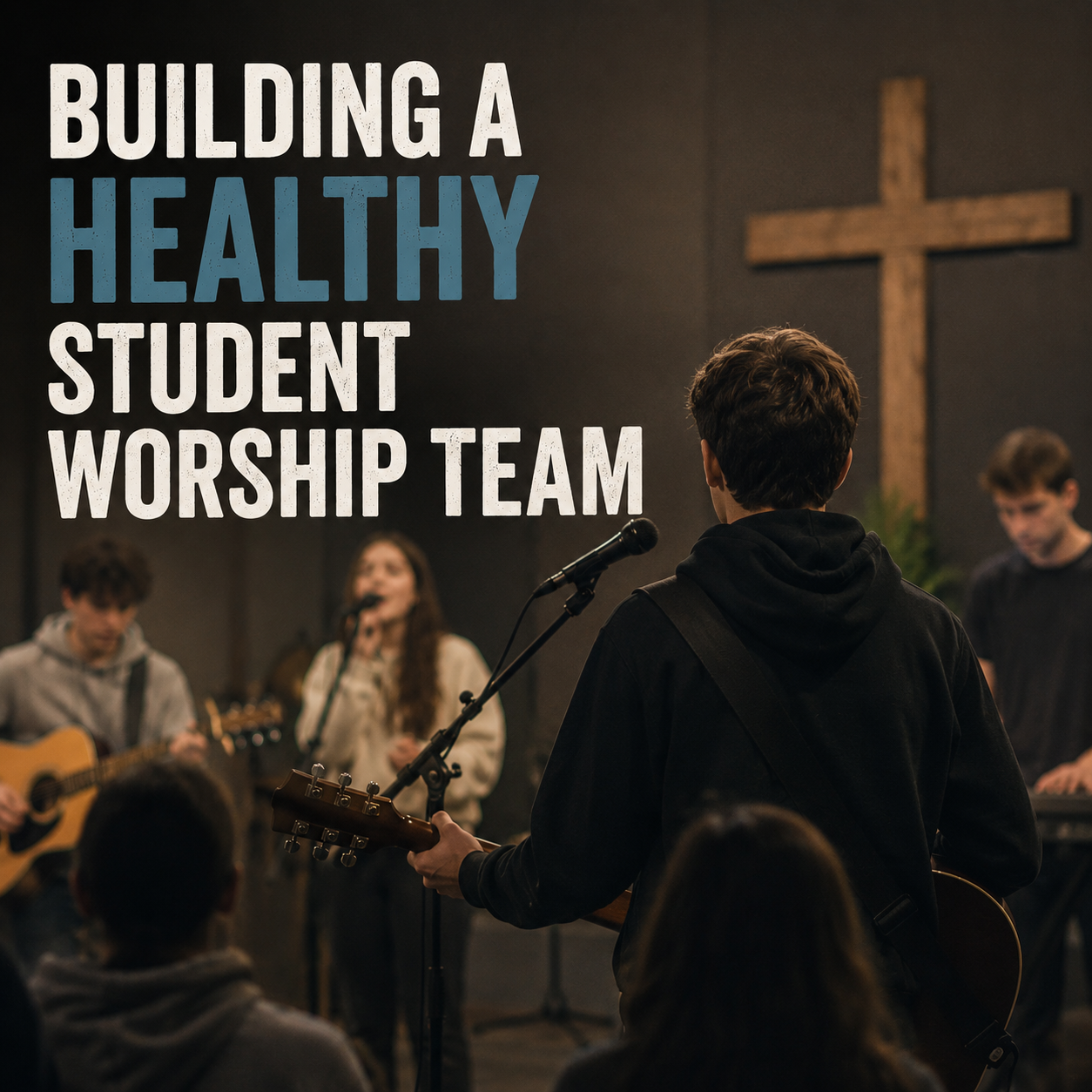
A healthy student worship team gives teenagers meaningful opportunities to use their gifts, grow as disciples and serve the church.

Every student who walks into your youth group is carrying something you may never see. They might walk in laughing,