
How To Respond When a Student Talks About Mental Health at Youth Group
September is National Suicide Prevention Month. Of course, this is something that’s more important than just one month, but it’s

Quiet students in youth group can be deeply engaged even when they rarely speak. The top reason we have a youth group is for the kids. The students are the ones we show up for and who we invest in for 6–7 years. The kids create the culture of your ministry, decide what game is cool, and are ultimately who we serve.
But I am going to tell you something that is not a secret. Whether you have been a pastor for 2 decades or 2 months, you know that all kids are different. They are raised differently, have different styles, personalities, and wiring.
The students who, as youth pastors, scare us the most are often the quiet kids. At any moment, or sometimes all the time, you have no idea if they are sad, happy, annoyed, enjoying the game, or excited about the topic. Most of the time, the quiet kids are the kids in the back, the kids not connected, and the kids who just show up.
But honestly, that is a misconception about quiet kids. Just because they are quiet does not mean they are not engaged or do not want to be there.
The goal of the youth group is to create a space for ALL students. The students who will not stop talking and the students you are begging to say just one word during the 7 years you are their pastor.
Here are some tips for creating space for the quiet kids in your youth group.
Silence. It’s scary.
Before I was a youth pastor, I was a small group leader. And silence was something I ran away from as a small group leader. Most of the time, I would immediately fill the space with talking or noise to avoid silence at all costs. I associated silence with failure. I viewed silence as the students not caring, the students not wanting to be there, or even worse, the students hating me.
Even in my first year as a youth pastor, I viewed silence as negative.
It wasn’t until I went to my first conference that I was reminded that we all need space to process. We all need time to think through our answers, and we need time to understand the question being asked.
“Middle schoolers need at least 10–15 seconds to process the question and think about what they are going to say,” one speaker said.
So, from that point on, I got into the routine of asking my students a question and then counting to 15 before saying anything else. I am not joking. Literally: 1 Mississippi, 2 Mississippi, all the way to 15 or until someone answered. And this isn’t just a youth ministry thing. Even in the world of academic education, it’s common practice for teachers to give somewhere between 5-15 seconds of processing time after asking their classroom a question.
I had to intentionally remind myself to allow students time to answer the question. It helped so much. They had time to process, and I didn’t have to fill the empty space. I realized that when I filled the silence with talking, I was distracting them from what they were trying to say.
I encourage you to do this too, but let me tell you, it will feel awkward waiting.
But the waiting is worth it.
The responses I have received in those moments of waiting have been incredible.
In youth ministry, checkpoints are key. They allow us to gauge if something is working, if students loved something, or if something just did not connect.
The goal is always to make our ministry better, but sometimes our only way of getting those checkpoints is by asking questions.
Now, asking a quiet kid a question in front of everyone can potentially feel like torture.
I encourage you to create normal rhythms of non-verbal checkpoints that benefit quiet students. And don’t make it something only for the quiet kids. Make it normal for everyone. That way, the quiet kids do not feel different because EVERYONE is participating in the same “new normal.”
Some suggestions of non-verbal checkpoints you can use to gauge your group, especially the quiet kids, are:
At the end of our programming, we dismiss students, and I always say, “Goodbye, Jesus loves you.” I also stand at the door and give every student a high five. In my mind, it always felt small. Not significant. But I intentionally chose to do it every single time.
This past Sunday, I got distracted at the end of programming while setting up for another event after church, and I had two students come find me and say, “We didn’t get our goodbye high five.” So, I gave them their high five, and they walked out of the room. I immediately teared up.
The high five was just a high five to me, but to them it was something memorable. A tradition. One of those students is so quiet that sometimes I think he doesn’t like me because he never talks, which honestly is not fair to him. He’s just quiet.
And I realized in that moment that the high five means a lot to him. He needs it.
So, I will continue giving high fives and sending students out with, “Goodbye, Jesus loves you,” because it matters.
Every single one of us wants to feel seen, heard, and loved. The quiet kids in your youth group want that too.
Sometimes it is hard to read them or understand what they are feeling because they are quiet. Incorporating intentional one-on-one time with the quiet kids is so important. It allows them to still have a voice, even if it is in a smaller setting.
Some of my students who are not even quiet have told me they appreciate the one-on-one conversations because they are not fully comfortable answering questions in front of everyone, but still want to share their thoughts.
This creates a space where quiet kids can ask and answer the questions they want to. It gives them an opportunity to give us feedback that helps make our ministry better for all students.
It also gives us the opportunity to ask questions we might not ask in a larger group setting, like:
All of these questions help give quiet students a voice and help them feel seen and heard.
But beyond that, these conversations help us know them on a deeper level instead of just placing them into the box of “the quiet kid.”
Quiet students do not need to be changed. They need to be considered. The moment you begin intentionally incorporating different ways to help quiet students stay engaged and feel welcome, it makes a difference. When we create space for the quiet kids, we do not just help them participate in the night. We help create an environment where they can belong. And over time, the more they feel seen and the more they feel like they belong, the deeper the conversations become.
Keep making space for the quiet kids.
Be open to changing the “normal routine” to benefit the quiet kids.
Continue using the quiet moments to help your quiet kids feel seen.
Never stop reminding the quiet kids that they matter.
Don’t be scared of the quiet moments. Lean into them.

September is National Suicide Prevention Month. Of course, this is something that’s more important than just one month, but it’s

This is probably one of the most unhinged titles of any blog post I’ve ever written. But I believe in
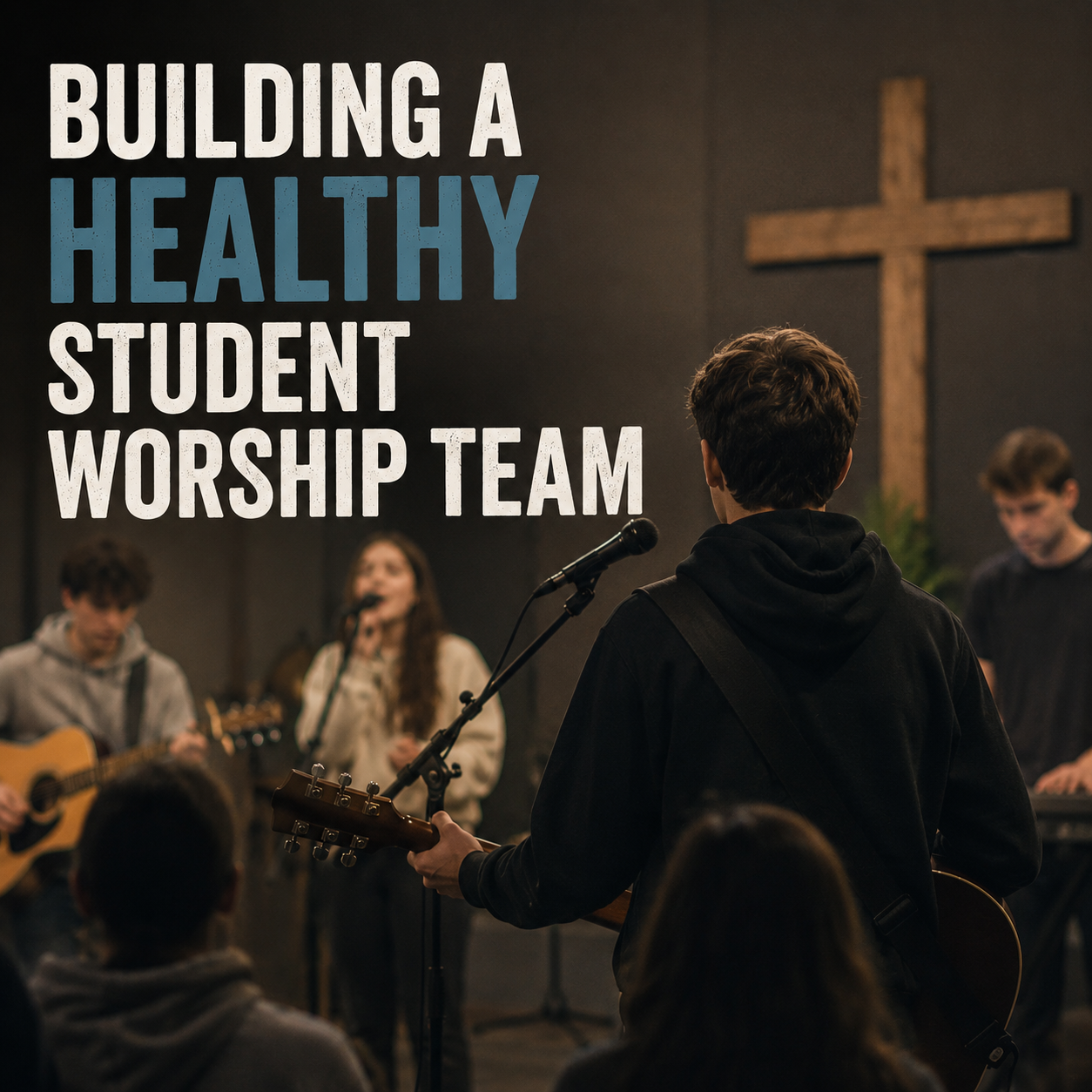
A healthy student worship team gives teenagers meaningful opportunities to use their gifts, grow as disciples and serve the church.