
Maintaining Work-Life Balance in Youth Ministry
You remember being a kid and you couldn’t wait to grow up? Being an adult felt so exciting. The idea
October is the best time of the year. Colder weather, bonfires, cozier clothes, and pumpkin spice lattes. But the best part of all these things? You get to do it with your friends! Okay, that was cheesy, but it’s true! Friendships are important. I believe God designed us for friendship. God never wanted us to live life completely on our own. The people we surround ourselves with can help us grow in the right direction, or they can pull us away from it. Students these days are in need of good friends just like anyone else. But it can be hard to know who the good ones are.
I want to be clear: I’m not here to dog on some students for not being a “good friend.” I just want to help you, as a leader, know how to have these conversations with students. Because our job as leaders is not to be their friend. It’s not to be their parent. It’s to be another adult in their life who helps them walk through life and grow in their relationship with God.
I’ve had many students talk to me about their friend-group drama. And honestly, as a student—and even as an adult—I’ve talked to mentors about the friend-group drama in my own life. It’s not something people simply grow out of. The drama is still there; it just looks a little different.
But these moments can really hurt our students. Losing a friend is never easy. So when a student asks you about healthy friendships, we need to take them seriously and try to understand the pain behind their words.
When I was in high school, I had my little group of friends. We did everything together. We were always at each other’s houses. We got into fights like normal high schoolers do, but in the end, we made sure to remind each other how much we cared.
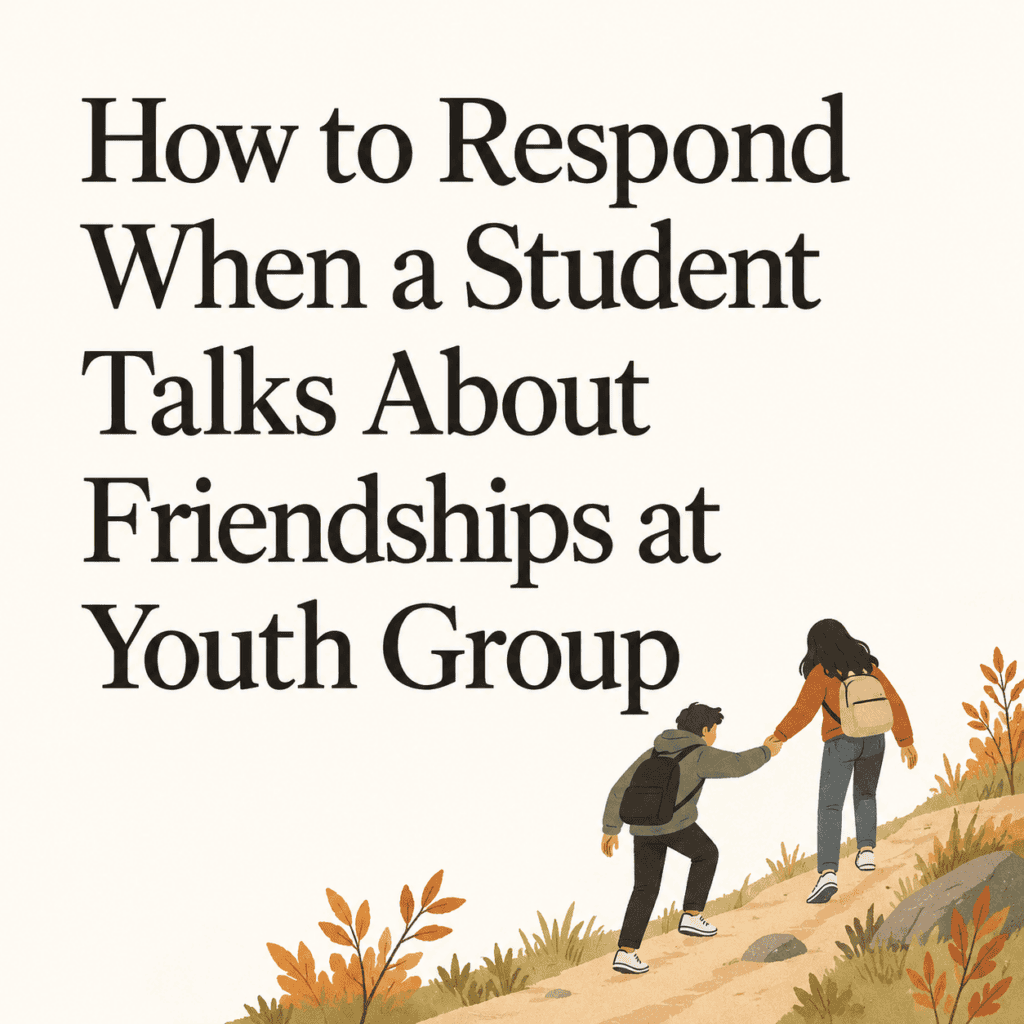
One year during a summer church camp, a speaker named Katie was on stage talking about good friendships. We were all sitting together, half paying attention, but then Katie started talking about a race she was in. She had done a half marathon, and she said that during mile ten, it was completely uphill. But they had people lined up on both sides cheering people on, saying encouraging words and encouraging them not to give up.
Katie talked about how we need friends who will cheer us on when our walk with Christ gets hard. Friends who will help us keep moving toward God, especially when following Him feels difficult. And how we needed to be that kind of friend to others. Katie said:
“All of us will have many points in our faith journey, where we get to mile ten and we will be asked to run uphill away from whatever is keeping us from the Father. Running uphill towards God. And you’re gonna need a lot of people in your life on the sidelines who are yelling at you things like, ‘you were made for more, and Jesus loves you…’”
Watch Katie’s original message.
My friend group locked in. We listened to every word she said. We even started taking notes. After the session, we all went back to one of our rooms and talked about it. We shared how we wanted to be “Ten Mile Friends” for each other. And from that day on, we were.
We still fought at times. But we showed up. We called each other out when we did something wrong, but we stayed to help each other through it. We helped each other with our faith in God and did Bible studies together. We made sure to be the type of friends who showed up. It wasn’t perfect. But there was never a doubt that we cared about each other.
I don’t say this as a way to brag, but just as an example. Students need people they can lean on. People they can connect with. People who will tell them the truth while still reminding them that they’re loved.
But that doesn’t just happen overnight. Being “Ten Mile Friends” takes work. It takes trust. It takes honesty. It takes showing up when it’s uncomfortable. But when we really try to help each other grow, it can make life a little bit easier. Search Institute’s Developmental Relationships Framework offers a helpful way to think about this: strong relationships include care, support, and opportunities to grow. That gives us a practical starting point for helping students think about healthy friendships.
So, as leaders, how do we help students find good, healthy friendships? I think there’s a lot that goes into it, but the main thing we as leaders need to remember is this: We’re not here to tell students exactly what to do. We’re here to help them see that there are other ways to live. We can show them what healthy friendship looks like. We can help them recognize relationships that encourage them to grow instead of tear them down. And we can remind them that God has something better for their lives than constantly trying to fit into what everyone else expects of them.
A “Ten Mile Friend” is someone who:
A good friend isn’t someone who agrees with everything you do. You don’t have to agree with your friend to love them. Students need friends who are willing to say, “Hey, I don’t think that’s a good idea,” without making them feel like they’re no longer loved because of it.
This is where the whole “Ten Mile Friend” idea started. There are going to be times when following Jesus feels hard. There are going to be moments when students question their faith, struggle with temptation, or simply feel exhausted. They need friends who will remind them, “You were made for more.”
It’s easy to be someone’s friend when everything is going well. It’s a lot harder when they’re struggling. A Ten Mile Friend doesn’t disappear the moment things get uncomfortable. They show up. They listen. They sit with their friends when they don’t know what to say.
Healthy friendships should help us become better people. That doesn’t mean your friends have to be perfect. Spoiler alert: none of us are. But the people we surround ourselves with can influence the direction we’re going. Are they encouraging you to grow closer to God? Are they encouraging you to make wise choices? Or are you constantly changing who you are just to keep them around?
As leaders, we don’t need to immediately tell them, “You need new friends.” Instead, we can help them slow down and think about what is really happening in the relationship. We can ask questions:
Sometimes asking the right question can help a student recognize something they couldn’t see before. And that’s where our role as leaders becomes really important. We’re not there to make every friendship decision for them. We’re there to help them learn what healthy relationships look like, give them space to process what they’re experiencing, and remind them that they don’t have to settle for relationships that constantly hurt them.
As leaders, we need to encourage our students to find good and healthy friendships and help them become a healthy friend to others. That’s what being a “Ten Mile Friend” is all about. It’s helping each other when things get hard. Reminding them of that is one of the best things we as leaders can do. As always, you got this!

You remember being a kid and you couldn’t wait to grow up? Being an adult felt so exciting. The idea
Picture this: Students walk into your space. A few students are shooting a basketball and celebrating. Three freshman girls are
September is National Suicide Prevention Month. Of course, this is something that’s more important than just one month, but it’s